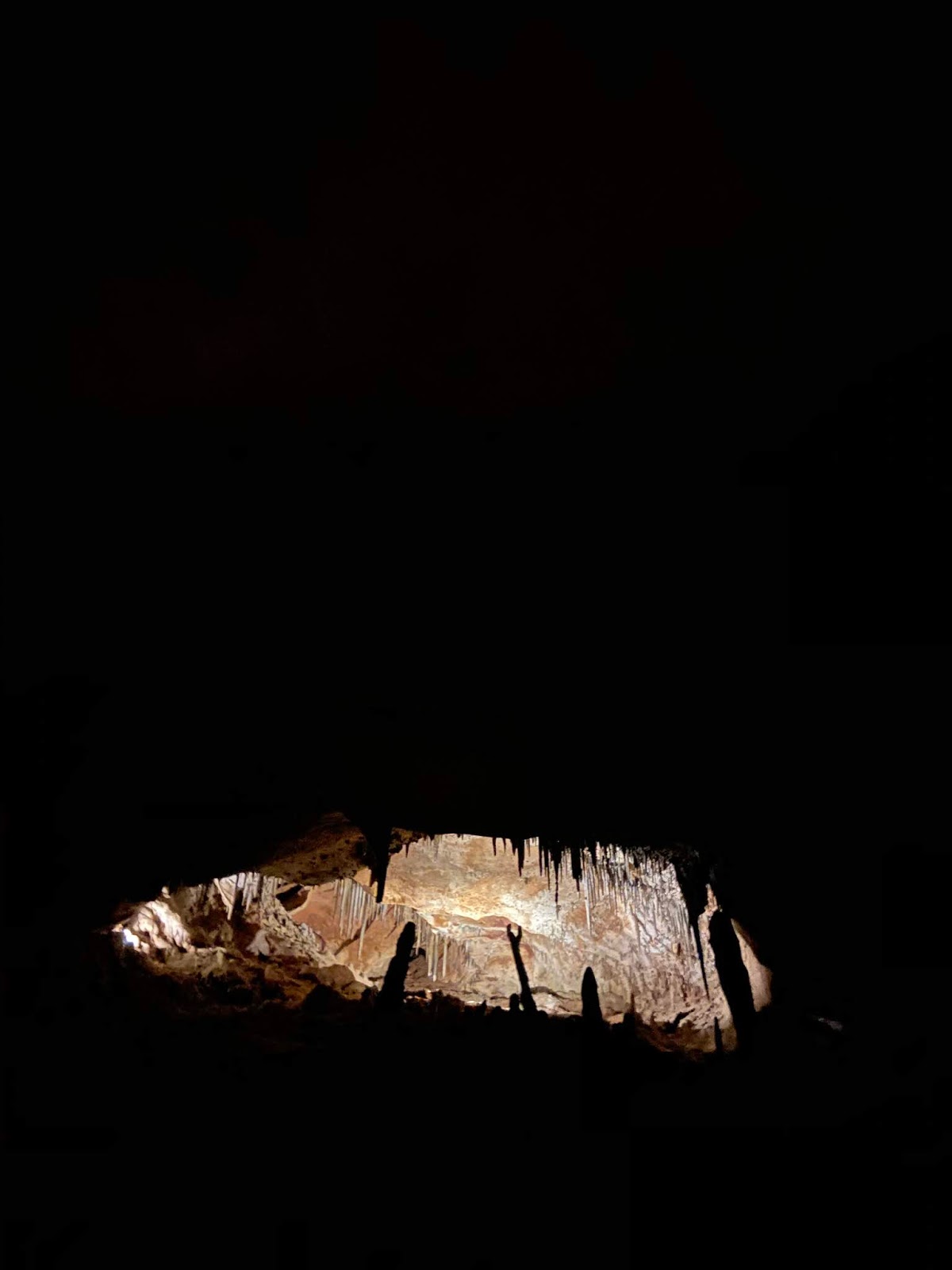
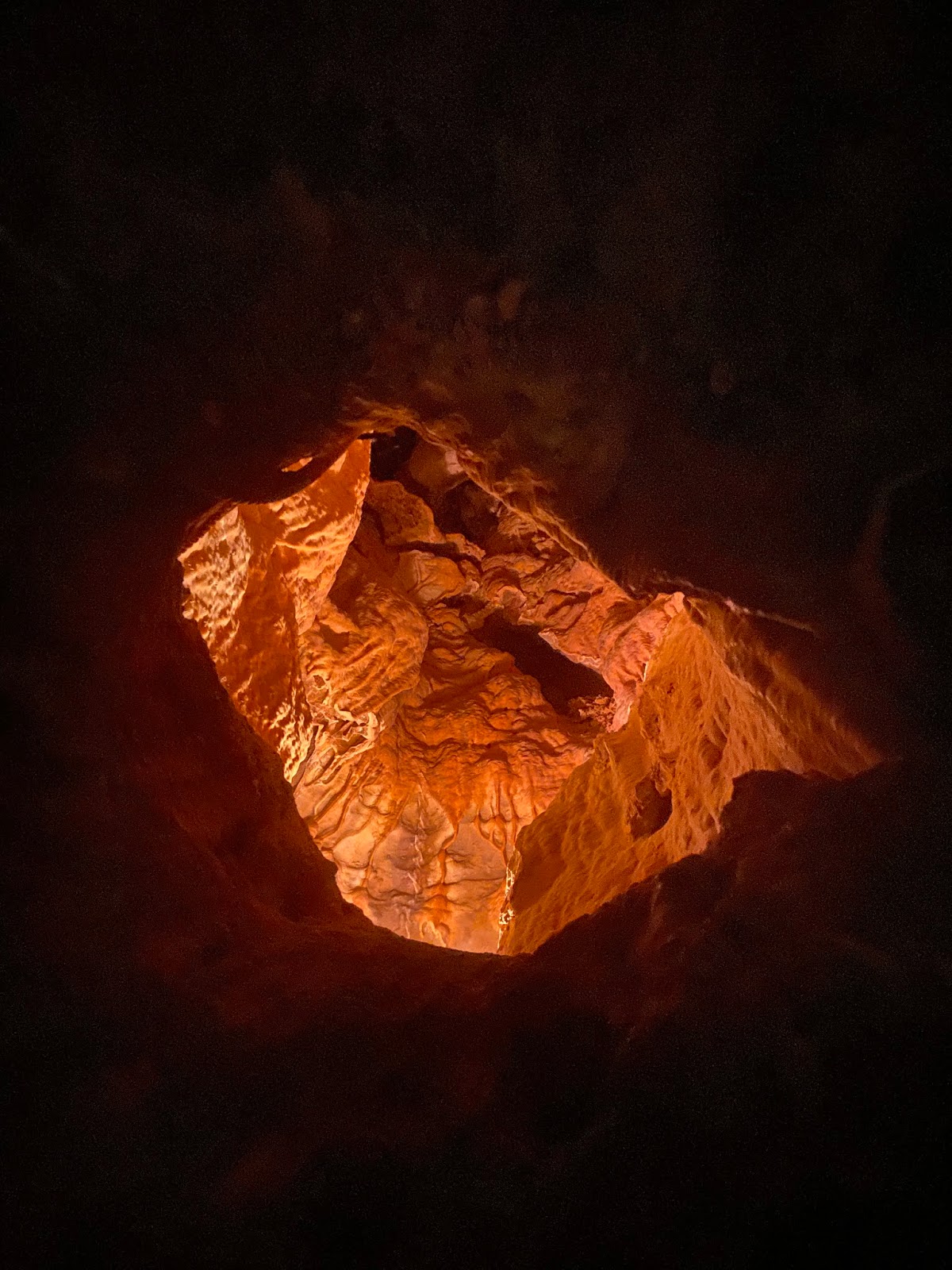
Travel Diaries: Manitou Cliff Dwellings

Take a step back into the ancient history of the Anasazi people when you visit the Manitou Cliff Dwellings. The Manitou Cliff Dwellings are located in Manitou Springs, Colorado just west of Colorado Springs off of US Highway 24.
The Manitou Cliff Dwellings and museum provide an inside look into the lives of the ancient Anasazi people. You will see artifacts, pottery, weapons and even the archaeological tools they used. The biggest appeal about the Manitou Cliff Dwellings is the fact that you are able to walk around inside the ancient-styles ruins.
Are the Manitou Cliff Dwellings real?
The ancient Anasazi people did not live in the Manitou Cliff Swellings of Manitou Springs. The Anasazi people actually roamed and the Four Corners area from 1200 BC to 1300 AD, which is about 300 miles away from Manitou Springs. The site in Manitou Springs was built as a tourist attraction and museum, however, it does feature the same rocks and artifacts that were found at the collapsed Anasazi site during the early 1900s.
What happened to the Anasazi people?
Get discount tickets here.


Coming to Detroit: Fiddler on the Roof

Get excited Detroit! Fiddler on the Roof is coming to the Fisher Theatre from March 10-15, and it\’s one show that you do not want to miss.

Tickets start at $45 and can now be purchased online at http://www.broadwayindetroit.com or http://www.ticketmaster.com. Tickets may also be purchased by phone by calling 800-982-2787, and at the Fisher Theatre box office.
A beloved theatrical classic from Tony Award-winner Joseph Stein, and Pulitzer Prize-winners Jerry Bock and Sheldon Harnick, Fiddler on the Roof is directed by Tony Award-winner Bartlett Sher (South Pacific, The King and I); choreographed by the acclaimed Israeli choreographer Hofesh Shechter; inspired by the original choreography of Jerome Robbins; and has musical direction by Ted Sperling.
Fiddler on the Roof is the heartwarming story of fathers and daughters, husbands and wives, and life, love and laughter. This classic musical is rich with Broadway hits, including “To Life (L’Chaim!),” “If I Were A Rich Man,” \”Sunrise Sunset,” \”Matchmaker, Matchmaker,” and “Tradition.”
Following a critically-acclaimed first year on tour, Israeli theatre, film and TV star, Yehezkel Lazarov, will continue his celebrated performance as Tevye in Year 2 of the Fiddler on the Roof North American Tour.
The cast will feature return performances from Maite Uzal as Golde, Jonathan von Mering as Lazar Wolf, Carol Beaugard as Yente, Ruthy Froch as Hodel. Additional casting includes Kelly Gabrielle Murphy as Tzeitel, Noa Luz Barenblat as Chava, Emma Taylor Schwartz as Shprintze, Carly Post as Bielke, Nick Siccone as Motel, Nic Casaula as Perchik, Jack O’Brien as Fyedka and Andrew Hendrick as Constable. The ensemble includes Jessica Altchiler, Mateus Barbosa da Silva, Nicholas Berke, Andrea Marie Bush, Nickolaus Colõn, Cam Cote, David Scott Curtis, David Ferguson, Kelly Glyptis, Michael Greenberg, Yochai Greenfeld, Sam McLellan, Randa Meierhenry, Carlye Messman, Ali Arian Molaei, Alynn Rinah
Parola, Gray Randolph, Cassandra Surianello, Brooke Wetterhahn and Scott Willits.
The original Broadway production of Fiddler on the Roof, which opened in 1964, was the first musical in history to surpass 3,000 performances. The show won the 1965 Tony Award for Best Musical in addition to eight other Tony Awards that year. This acclaimed revival proudly introduces a new generation to the iconic musical adored across the globe.
The world premiere of Fiddler on the Roof, before it went to Broadway, was at Detroit’s Fisher Theatre in 1963 starring Zero Mostel.
Fiddler on the Roof has scenic design by Michael Yeargan (Tony Award-nominee, The King and I), costume design by Catherine Zuber (Tony Award-winner, The King and I), lighting design by Donald Holder (Tony Award-nominee, The King and I), sound design by Scott Lehrer (Tony Award-winner, South Pacific), and hair and wig design by Tom Watson.
Website: www.Fiddlermusical.com
Facebook: www.facebook.com/FiddlerBroadway
Twitter: www.twitter.com/FiddlerBroadway
Instagram: www.instagram.com/fiddlerbroadway
Performance times for Fiddler on the Roof appearing March 10-15, 2020 at the Fisher Theatre, located at 3011 West Grand Blvd., in Detroit are:
Tuesday – Saturday evening performances at 8:00 p.m.
Sunday evening performance at 7:30 p.m.
Saturday & Sunday matinees at 2:00 p.m.
Special open captioned and audio described performance on Friday, March 13 at 8:00 p.m.
Tickets for Fiddler on the Roof start at $45 (includes facility and parking fees) and are now on sale. Tickets can be purchased online at broadwayindetroit.com or ticketmaster.com, and by phone at 800-982-2787. A limited number of premium seats will be available through Ticketmaster and at the Fisher Theatre box office. For group sales (10 or more) please call 313-871-1132 or email groups@broadwayindetroit.com. Tickets for the open captioned and audio described performance may be purchased in person at the Fisher Theatre box office or by phone at 313-872-1000, ext. 0. Performance schedule, prices and cast are subject to change without notice.
Broadway In Detroit uses Ticketmaster as its sole, authorized ticketing agent. Individual tickets purchased from a ticket broker or “third party” ticket reseller involves risk and may not be authentic, sold at box office prices, or with correct performance and venue information. Broadway In Detroit box offices cannot reprint or replace lost or stolen tickets sold through a third party or ticket reseller. Broadway In Detroit is also unable to contact third party purchasers with pertinent updates or changes regarding performances.
The Best Rom-Coms for Valentine\’s Day


Grand Rapids Popcorn Company Valentine\’s Gift Box Features:
A 16-ounce bag of Sweetheart Swirl popcorn
A 3-ounce bag of White Salted popcorn
Two 4 ounce bags of Cinnamon Nuts (I am obsessed with these)

Pro Tip: Grab your Grand Rapids Popcorn Company Valentine\’s Gift Box
The Best Rom-Coms for Valentine\’s Day
Sweet Home Alabama (all-time favorite movie)
Falling Inn Love (on Netflix and super adorable)
Leap Year (perfect to watch since it\’s actually a leap year)
Beauty and the Beast (the live-action one is amazing)
The Notebook (I mean, how can you not watch this movie?)
Dirty Dancing (because nobody puts baby in the corner)
Casablanca (need I say more?)
He\’s Just Not That Into You (you know… I had to)
Coming to Detroit: The Naked Magicians

Ladies! I have the perfect girl\’s night out for you….The Naked Magicians are coming to Detroit, and this is one show you\’re not going to want to miss.
Following their smash hit 2019 residency at the MGM Grand in Las Vegas, The Naked Magicians will return to the U.S. for a coast-to-coast tour in 2020 making a stop in Detroit at The Music Hall, March 6 & 7. Starring Mike Tyler and Christopher Wayne, two of Australia’s most famous magicians, the duo will forego top hats and capes for full-frontal illusions complete with magic, muscles and endless laughs.
Tickets for The Naked Magicians start at $39 and are now on sale. Tickets can be purchased online at http://www.broadwayindetroit.com or http://www.ticketmaster.com, and by phone at 800-982-2787. Tickets may also be purchased at The Music Hall and Fisher Theatre box offices.
Perfect for date night or the ultimate “Girls Night Out,” The Naked Magicians have performed — and undressed — for millions of fans in more than 250 cities and seven countries. “Good magicians don\’t need sleeves and great magicians don\’t need pants,” says Tyler. “When we say ‘abracadabra,’ the audience isn’t always looking at our hands.”
The buff bros went from best friends to partners in prestidigitation following several boisterous audience members asking them to make their clothes disappear. \”It\’s kind of crazy because magic is the second-oldest profession ever and we couldn\’t believe that no one had combined the two things that everyone loves — magic and nudity,\” says Wayne.
The broad-shouldered Wayne and proud owner of a freakishly long tongue is the first Australian magician in TV history to have his own TV series (More Than Magic). The sporty tan lines and incredible physique seen on stage hint at Tyler’s Speedo-wearing days when he swam competitively at the Australian National Championships and Pan Pacific Games before becoming a professional magician. “Being on stage doing magic without relying on pockets or sleeves does add that extra challenge and ups our game,” Wayne says.
For more information go to www.nakedmagicians.com and follow The Naked Magicians online on Facebook (@sleevesuppantsdown), Twitter @NakedMagicians and Instagram @thenakedmagicians.
Performance times for The Naked Magicians appearing March 6 & 7, 2020 at The Music Hall, located at 350 Madison Ave. in Detroit are:
Friday evening performance at 7:00 p.m.
Saturday evening performances at 7:00 p.m. & 10:00 p.m.
Tickets for The Naked Magicians start at $39 (includes facility fee) and are now on sale. Tickets can be purchased online at http://www.broadwayindetroit.com or http://www.ticketmaster.com, and by phone at 800-982-2787. Tickets may also be purchased at The Music Hall and Fisher Theatre box offices. For group sales (10 or more) please call 313-871-1132 or email groups@broadwayindetroit.com.
A limited number of PREMIUM VIP seats are available in the first two rows of the theatre which include an exclusive post-show Meet & Greet and Q&A with The Naked Magicians cast and creators, plus the ultimate cheeky photo taken by the show and digitally delivered to VIP ticket holders!
Performance schedule, prices and cast are subject to change without notice.
Broadway In Detroit uses Ticketmaster as its sole, authorized ticketing agent. Individual tickets purchased from a ticket broker or “third party” ticket reseller involves risk and may not be authentic, sold at box office prices, or with correct performance and venue information. Broadway In Detroit box offices cannot reprint or replace lost or stolen tickets sold through a third party or ticket reseller. Broadway In Detroit is also unable to contact third party purchasers with pertinent updates or changes regarding performances.
Travel Diaries: Exploring Cave of the Winds